 Reviews


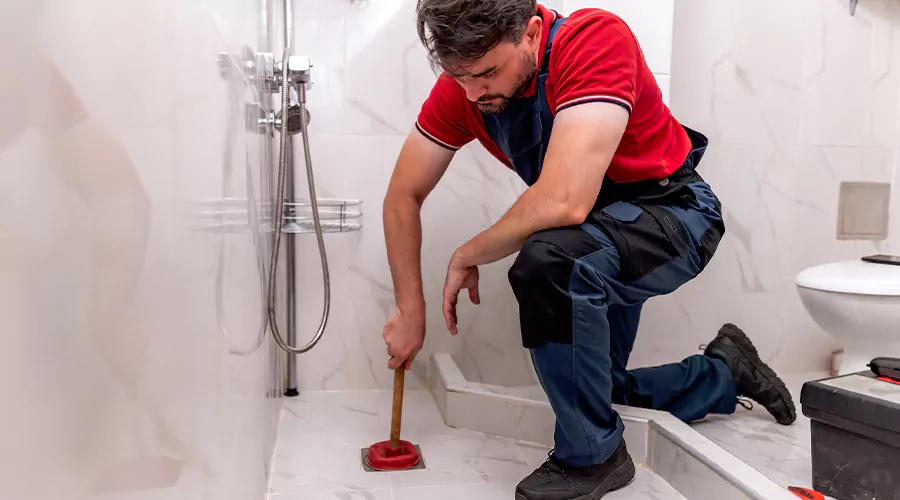
A clogged shower drain clears with $5 of tools in about 80% of cases, since hair causes most of them within arm's reach of the opening. A plumber charges $75 to $175 for the same simple tub or shower clog.
The fix follows an escalation ladder: hands, fizz, plunger, snake. Each rung costs a little more effort than the last and reaches a little deeper.
Chemicals sit at the bottom of the list on purpose. The bottle is the only method here that can make things worse.
Why Shower Drains Clog?
Hair and soap scum build nearly every shower clog as a team. Hair catches on the drain's crossbars, then soap and mineral residue glue the strands into a felt-like mat. Water still passes at first, which is why the problem sneaks up over weeks.
The timeline tells you the cause. A sluggish shower drain that worsens week by week is usually a hair-and-scum mat thickening in place. By contrast, a shower clogged overnight usually swallowed one large clump at once, often after someone brushed out long hair in the stall. Understanding how the blockage developed can help determine the right approach for Clogged Drain Repair.
Composition decides the cure. A hair clogged drain responds to mechanical removal far better than to any liquid, because chemicals struggle to dissolve compressed hair.
Insider tip: hard water speeds the whole process. Mineral-heavy water builds soap scum faster, so homes without a softener clog on a shorter cycle.
Run the One-Minute Drain Test
Sixty seconds of observation tells you which section of this guide you need. Fill two inches of water, pull the stopper and watch the clock. The result sorts every clog into one of three buckets.
Standing shower water not draining within a minute of shutoff fails the baseline and means a partial blockage close to the opening. A slow spiral that eventually empties points to the mat forming on the crossbars. A shower not draining at all, with water sitting for hours, means a full blockage in or past the trap.
Speed matters here too. Partial clogs are five-minute fixes today and trap-level projects next month, so the best day to act is the day the spiral slows.
Pull the Hair Out First
Mechanical removal beats every other method for hair, and it starts with your hands. Remove the drain cover with a screwdriver or by prying, shine a flashlight in and tease free any blockage sitting near the surface with gloved fingers.
Two cheap tools reach past your fingers. A barbed plastic hair drain clog remover costs under $5, slides past the crossbars and drags the mat up on its teeth. To remove hair from drain sections deeper still, straighten a wire coat hanger and bend a small hook into one end, then fish and lift. A homemade hook will get hair out of drain crossbar tangles that the flat strip slides past.
Expect the result to be gross and satisfying in equal measure. The full mat usually comes up in one connected piece.
Insider tip: drop the recovered clump in the trash rather than the toilet. A hair mat that clogged one drain will happily clog another.
Baking Soda and Hot Water Next
The fizz method handles the residue your tools left behind. Pour one cup of baking soda directly down the pipe, follow with one cup of white vinegar and let it fizz for an hour before washing it down. Then finish hot: a kettle of steaming water helps unclog hair from drain walls after the main mass is out.
Heat carries a caveat. Pour boiling water only into metal pipes, and give PVC systems very hot tap water instead. For maintenance between clogs, an enzyme shower drain cleaner works overnight and monthly without harming anything.
The store-bought bottles earn their bad reputation. A caustic shower drain pipe cleaner can corrode pipes with repeated use, and bleach may not even work on a shower clog. Treat any chemical shower drain declogger as the last resort after every mechanical option, never the first pour.
Plunge Before You Snake
A plunger converts your arm strength into hydraulic pressure, and showers respond to it as well as toilets do. The seal is the entire technique. Five focused minutes here saves the snake for the truly stuck.
- Remove the drain cover and position the cup over the opening.
- Add enough water to cover the lip of the cup.
- Smear petroleum jelly on the cup's edge if the seal keeps breaking.
- Plunge up and down quickly, then run water to check drainage before replacing the cover.
Pressure works both directions on a partial clog, so alternate sharp downstrokes with strong pulls. The pull often frees a mat that pushing only compacts.
Snaking a Shower Drain
Snaking a shower drain reaches the clogs your first three methods couldn't touch. A hand-crank drum auger costs $15 to $30 and extends 15 to 25 feet. The technique rewards patience over force.
- Insert the snake into the open drain until you feel resistance.
- Turn the handle clockwise to hook the clog and keep feeding cable.
- Read the feedback: rising resistance means the snake is grabbing material, and a sudden release often means the line cleared.
- Give one more full turn to set the hook, then crank counterclockwise and back the snake out slowly.
- Remove the debris, run hot water to confirm flow and replace the cover.
A shower blockage that lives below the trap is exactly what this tool exists for. Work gently in older homes, since aging pipes punish aggressive cable work.
Insider tip: wipe the cable with a rag as you retrieve it. A clean snake tells you by feel whether the last foot grabbed anything new.
When the Clog Sits Deeper?
Some symptoms mean the shower is the messenger rather than the problem. When the shower will not drain even after a full snaking, the blockage sits in the branch line beyond your tool's reach. Pattern recognition saves you from re-fighting the wrong battle.
Watch for the multi-fixture signals. A shower drain not draining while the nearby sink gurgles points to a shared branch clog. Weather is a stranger tell: a shower not draining properly only during heavy rain suggests a main or municipal line surcharging rather than hair anywhere.
Repetition is the loudest signal of all. Recurring clogs often mean buildup deeper in the plumbing system or a clog only partially removed, and that's a camera-and-cable conversation with a pro.
What Professional Clearing Costs in 2026?
Professional shower drain service stays affordable because access is easy. Simple sink and tub clogs run $75 to $175 with a hand snake, and fixture-level jobs top out around $275 including the visit.
| Situation | 2026 cost |
|---|---|
| DIY hair tool and plunger | Under $15 |
| DIY drum auger | $15 to $30 |
| Pro fixture snaking | $100 to $275 |
| Branch or main line work | $150 to $500 |
Book weekday hours and the low end of every row stays in reach. Emergency slots carry the usual surcharge for a problem that a bucket under the faucet could postpone.
Prevention Takes Ten Seconds a Week
Hair stopped at the surface never becomes a clog. The cheapest way to get rid of hair in drain lines is a $5 mesh screen or silicone catcher over the opening. Three habits close the loop.
- Screen the drain: And clean hair from drain catchers after every few showers, which takes ten seconds.
- Flush hot weekly: A kettle of hot water each Sunday keeps soap scum from hardening.
- Brush before showering: Loose hair in the brush is hair that never reaches the drain.
- Fizz monthly: The baking soda treatment as maintenance costs pennies and keeps the walls slick.
Conclusion
Almost every shower clog is a hair mat waiting within two feet of the grate, and the ladder of hands, fizz, plunger and snake defeats it in order. Multi-fixture symptoms and repeat clogs graduate to professional cable work. This week, put a screen over the drain and run the one-minute test, and you'll likely never need the rest of this guide again.